iphone photos |
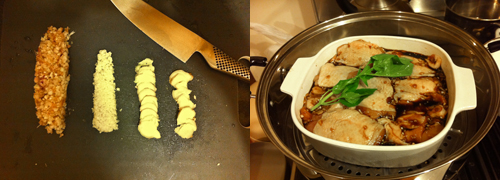 |
| Shallots, Garlic, Ginger slices, Basil & Chicken placed in a steamer with aged shitake mushroom soy sauce, and Taiwanese Cooking wine. Steamed for 90 minutes. |
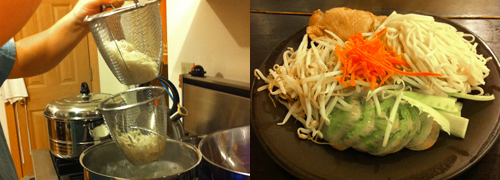 |
| Noodles and bean sprouts boiled for a few minutes then shaken until done. Added to a plate of cucumbers, carrots, green zebra tomatoes, chicken thigh, bean sprouts and noodles. |
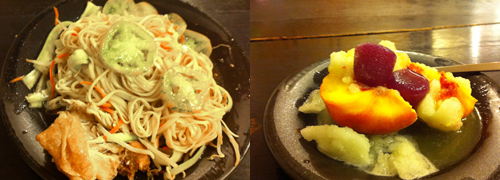 |
All mixed together with a little of the sauce from the steamer and roster sauce. And for desert, peach with cucumber sake sherbet, mango juice, and gum drops. |
Sunday, August 29, 2010
kitty: special meal.... sorry no knitting content today

Monday, August 16, 2010
kitty: inspiration - Issey Miyake Paris 1970's
ISSEY MIYAKE PARIS MADE IN FRANCE - CIRCA 1970's Awesome Inspiration for you |
Monday, August 09, 2010
kitty: raglan obsession
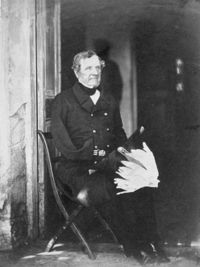 |
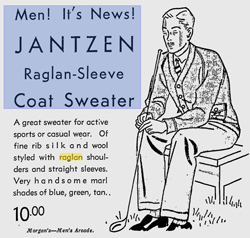
During the Crimean War, FitzRoy Somerset, 1st Baron Raglan lost his arm. He was wounded, 5 stab wounds to the left shoulder, at the Battle of Buçaco(1815). To make his dressing easier his tailor invented a diagonal sleeve that exteded from the neck to the underarm. It allowed for the mobility that he needed. It had a relaxied fit that could easily be shrugged off. The Raglan sleeve was then named after him. The Raglan sleeve basically disappears until the early 1900's. Where it appeared again in an add in 1913 for and English Top Coat that was introduced for that fall season. The New Automobile Coat was made of fine wool for the fall season. It disappeared during the war because it the excess fabric needed. Than again in the 1930's Jantzen started to run about men's casual clothing that were styled with a raglan shoulder. (The Montreal Gazette - Apr 3, 1935 page 20)
|
| (Photo from the Wikipedia post on him) | |
 |
|
| So how do you make a Raglan Sleeve - sewing | |
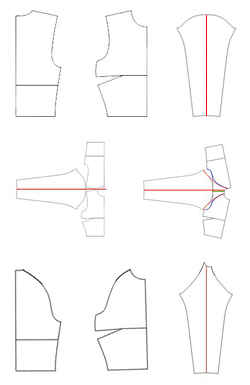 |
When creating a Raglan in flat pattern making it is rather easy. 1) Trace the front, back and sleeve slopper 2) Lign up the back and front shoulder seams and tape them together 3) Lign up the sleeve 4) Now take your flexicurve ruler and draft a new curve for the back and the ftont. You will want to check that your back and front length are the same. With this processes you are actually creating three new pattern pieces where you are removing a little bit of both the front and back of the slopper bodice is added to the sleeve. 5) Retrace your new pattern pieces and add seam allowances. |
| But the question and the purpose of this post is how do you get a knit raglan that fits, especially if you are plus size? | |
So as we all do, the first thing I did was do a google search. 1) The Incredible, Custom-fit Raglan Sweater So I read there instructions, plugged in my numbers and checked there chart. So for my chest size it told me that my raglan length should be 18 inches. What????? As I thought, that would mean that my armhole would um touch my natural waist. I don't think that would be particuarly comfortable and/or look that great. On a side note, I do think there chart for calculating the stitches around the neck is really clear. Then this got me to really thinking about how they were treating the porpotions for the sweater. It seemed to me that they were treating the body only in the terms of width and assuming the person just got taller with the width. There wasn't a lot of calculation taken into account for the fact that person could be wide. So more Googling.... |
|
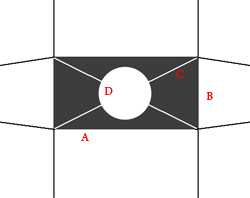 |
2) Then I found: General Guidelines for a Basic Raglan Sweater They broke dow the construction of how a raglan should be broken down for construction. C. The rate that you decrease in the length of C to obtain the correct number of stitches for D from the sum of (A+B)*2 |
| So I continued to do more research.... Now for looking in the books I own... | |
Percentage method - Which still is closer but still a little off for larger sizes it seems. The depth of the yoke is approximately 1/2 of the width of the sweater. So if the body of the sweater is: 32 inches is is 16 inches across and then the raglan would be 8 So I measured several of the commercial raglans I have and the raglans seems to be 10-11 inches on average. They are perfectly comfortable, so I would say that on average you are looking at 10.5 inch raglan. If you want a fitted raglan this method really isn't going to give you a good result. So back to the chalk board.... Not that I am getting obsessed about this. |
|
Saturday, August 07, 2010
kitty: embroidery at Dublin Irish Festival
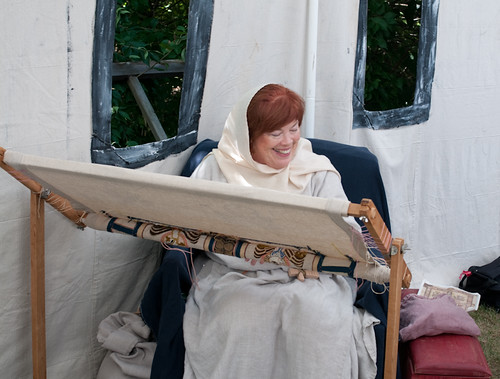 |
 |
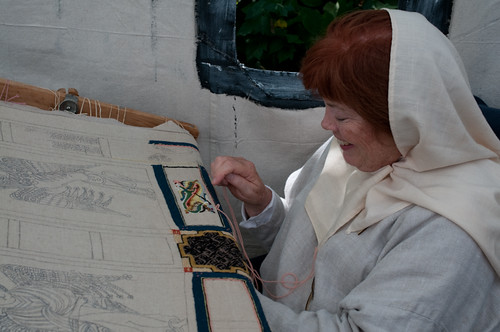 |
photos taken by M |
Dublin Irish Festival |
| Every year they set up a craft area at the festival where they have been working on this reproduction embroidery for the last 10 years. It is fun to see how it progresses each year. |
Wednesday, August 04, 2010
knitty: ohio knitting mills - part of Cleveland, OH textile history
 |
|
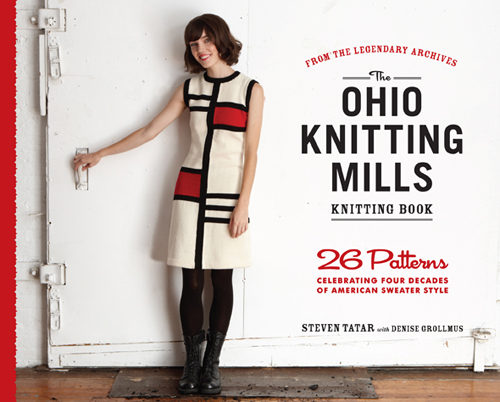
The Ohio Knitting Mills Knitting Book: 26 Patterns Celebrating Four Decades of American Sweater Style This is one of those books I have been waiting for since I saw the preorder listing on Amazon. I really didn't know anything about the title, but since I live in Ohio and into textile history of just about any kind I went ahead and preordered. |
|
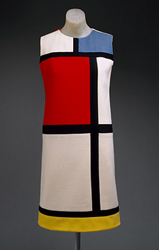 |
If nothing else I was intrigued by the cover sweater which appeared to be a inspired by the 1965 YSL dress that was inspired by Mondrian. YSL was inspired by the Composition series of Piet Mondrian and he translated his paintings into dresses for his fall collection in 1965. After reading about that pattern, it turns out that OKM reproduced that design and sold it for $30.00. The book is really delightful. A little touch of the history of the mill and 26 modern recreation of a few of there designs. The pattern range in history from the 40's - 70's. I wish there were earlier examples of there works, but that is always the way things are. The technical drawings that are inside the book jacket in the front and the back are probably my favorite touch. But the photo of the original garment and the modern interpretation is a nice touch for each garment. You can still purchase some of the vintage sweaters from the mill. I sheepishly didn't know much about the Ohio Knitting Mill, but I checked out there site and a couple of other sites about the mill and the shop...... So what happens when you have a collection of over 10,000 knit wear garments stored in a time capsule? You open up a store in NYC, create a web site to sell vintage sweaters and release a book about the history of the Cleveland, Ohio sweater mill. |
| "Yves Saint Laurent: 'Mondrian' day dress (C.I.69.23)". In Heilbrunn Timeline of Art History. New York: The Metropolitan Museum of Art, 2000 ndash;. http://www.metmuseum.org/toah/works-of-art/C.I.69.23 (October 2006) Source: Yves Saint Laurent: "Mondrian" day dress (C.I.69.23) | Heilbrunn Timeline of Art History | The Metropolitan Museum of Art |
|
Other links of interest Sketch up for auction by YSL for the Mondrian dresses of '65 Christie's Auction photo of Piet Mondrian's Composition avec bleu, rouge, jaune et noir, 1922, (estimate: $10-14 million), which sold at Christie's Photos from the YSL, Style, Style, Style book |
|
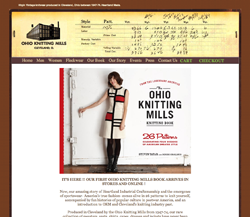 |
Cleveland, Ohio was second to only NYC for textile manufacturing at one point in time. The Ohio Knitting Mills was founded in 1928 by Harry Stone whose family for three generations ran the mills until it was closed during2003. What really saddens me is that this great collection of American textile history was not documented it has been sold off piece mill to vintage collectors. The mill once made garment for Lord & Taylor, Sears, Montgomery Ward, Pendleton, Van Heusen, Jack Winter, Queen's Way of Fashion, Petti, and Easmoor. The other disheartening and sad thing is, this may be the only way to buy an American mill made sweater at this point in time. |
http://ohioknittingmills.wordpress.com/ - http://www.ohioknittingmills.com/ To See a real treat of some of the photos taken from people who have seen the photos Ohio Knitting Mills @ Lizard Lounge on Karmalot - A creative coop - Click Here Photos on Country Living - Click here
|
|
Subscribe to:
Posts (Atom)